Fragrance Branding for Retail and Corporate Spaces: How to Build a Scent Identity


Fragrance branding means choosing one signature scent that matches your brand, then using it consistently across every space. The scent has to fit what your brand stands for, not just smell pleasant. A 2021 experiment with 303 people found that a scent seen as consistent with the brand image improved guest satisfaction and the intention to return.
The wider evidence is mixed. A 2020 test in a men’s clothing store found no significant effect on purchase intent or visit length, so test scent identity in your own space rather than assume it works.
We create custom signature scents and sell a range of luxury scents. This guide covers the steps, the evidence and the limits.
How can a shop or office create its own signature scent?
Describe your brand in three words, then choose a fragrance family that matches them. Test it in the actual space, and deliver it through a scent diffuser at a steady strength. Keep it the same across spaces.
Three words is a deliberate limit. If you need ten, the brief is too broad to choose a scent from.
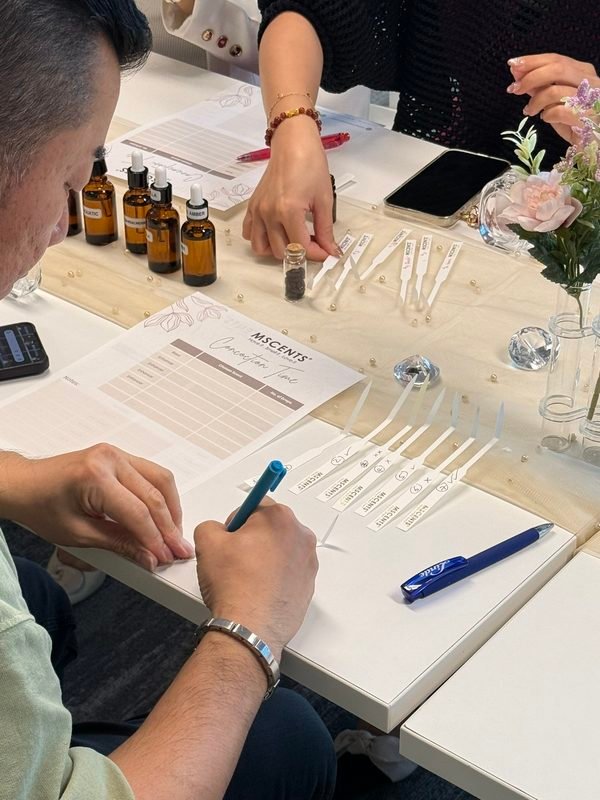
Fragrance families give you a way to talk about scent: woody, floral, citrus, fresh, herbal. Pick the family first, then the exact scent. Test it in the real space, because a sample on paper doesn’t show how a scent behaves at ceiling height, in airflow, and beside other smells.
How do you match a fragrance to your brand?
Match the fragrance to what customers should feel and what your brand stands for: calm, premium, local or fresh. Sample two or three options from one collection in the real space before choosing. Fit matters, and a luxury scent is unlikely to help a brand whose image is not luxury.
A 2021 study by Karim Errajaa and colleagues in the International Journal of Contemporary Hospitality Management compared a scent that matched a venue’s brand image with one that did not, and with no scent. Its conclusion was clear. A scent that smells good is not enough. Customers must see it as consistent with the brand.
A 2026 study in the Journal of Retailing and Consumer Services by Kim and colleagues found that scent congruence with a luxury brand image was associated with stronger consumer preference and memory, as well as higher satisfaction, brand resonance and purchase intention. It focused on luxury brands entering the fragrance category, so it supports the principle of fit more than any specific result for a shop or office.
Our fragrance collections include Luxury Hotel and Hallyu Nature, with more than 42 scents in total. Our guide to fragrance by industry shows how scent families suit different businesses.
| Brand type | What the scent should signal | Fragrance direction to sample first |
| Premium retail or corporate lobby | Quality and polish | Woody or amber notes; Luxury Hotel collection |
| Local or heritage brand | Place and familiarity | Notes linked to the place, such as tea or tropical florals |
| Wellness or calm space | Rest and ease | Herbal, tea or soft floral notes |
| Hospitality-style reception | Welcome and consistency | Luxury Hotel collection; clean, light floral notes |
These are starting points for sampling, not rules.
Hotel-inspired scents also suit retail spaces. Our post on the Hotel Scent Collection in retail explains how.
Do I need a custom scent, or is an existing one enough?
Not always. Smaller businesses can start with our existing range of more than 42 scents and test what suits their space. If you want something exclusive, ask us about custom signature scent creation.
How do you keep a scent identity consistent across spaces?
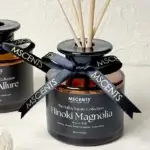
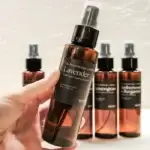
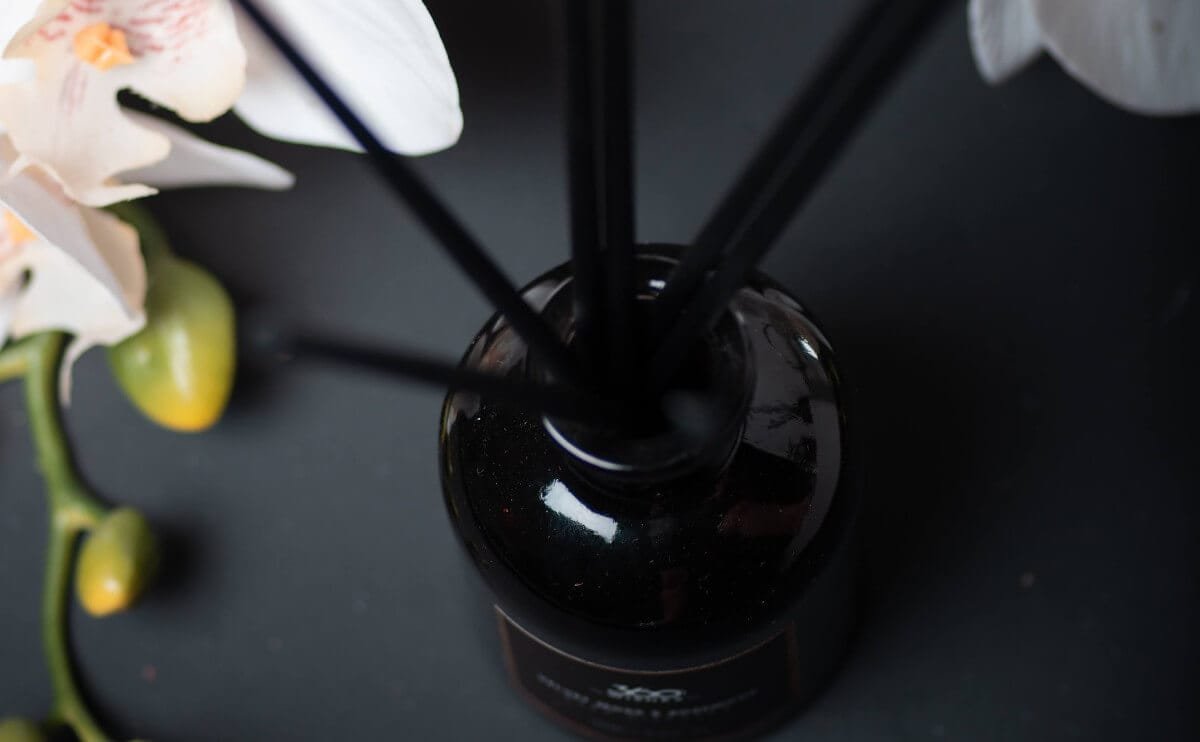
Use one fragrance collection across every space and every format, and deliver it at a steady strength. Large areas need a commercial scent machine, while counters and fitting rooms can use reed diffusers or sprays. Keep the strength low and the fragrance fixed, so customers experience the same scent on each visit.
Researchers at The Hong Kong Polytechnic University suggested that using the same signature scent across a hotel’s locations can evoke familiar, pleasant memories among returning guests.
Our commercial scenting service includes a leased machine, installation, a warranty, filter replacement and servicing.
Write a one-page scent standard: the collection, the strength for each type of area and who refills the oil. Share it with each branch. If you have several outlets or properties, check each space’s size before you copy settings.
Does fragrance branding work in retail and corporate spaces?
Results vary. A separate 2020 study by Errajaa, Daucé and Legohérel, published in the Journal of Retailing and Consumer Services, found that strong scent congruence with a brand image positively affected consumer spending, attitudes and perceptions of the store atmosphere. A 2020 conference paper by Errajaa for the European Marketing Academy, testing a men’s ready-to-wear store in Paris, found no significant effect on purchase intent, intention to visit or visit duration. The 2021 experiment tested one French café and co-working brand, and its authors say the research should be extended to other settings.
Treat fragrance branding as something to test in your own space, not a guaranteed lift. Most of the studies cited here took place in shops, cafés and hotels. Test any result in your office before you assume it carries over. Measure before you start, such as time spent in the space, sales and satisfaction scores, so you can compare.
Plan your scent identity
If you want to plan a signature scent for your shop or office, contact our team. Tell us about your brand, your space and how many areas you want to scent, and we will reply with the next steps.
Frequently Asked Questions
Should the scent match my products or my brand?
Choose for the brand first. The 2021 study found that customers must see the scent as consistent with the brand image, and smelling good was not enough.
What is the difference between fragrance marketing and fragrance branding?
Fragrance marketing is the wider use of scent to influence customers, such as a seasonal scent or a promotion. Fragrance branding is the long-term part, where one scent becomes recognisable as yours.
Does a scent identity need to be luxury?
No. A 2021 study took place in a café and co-working space, not a luxury venue, and found that the scent had to be consistent with the brand image. Ask whether customers would link the scent to your brand, not whether it sounds expensive.
How long should I keep the same scent?
Keep it long enough for repeat customers to link it with you. Change it only if your tests show a problem, and plan any seasonal change as a deliberate campaign, not a swap.