Ambient Scenting for Office Buildings: Lobbies, Reception and Common Areas


Ambient scenting for office buildings means releasing a light, steady fragrance in lobbies, reception areas and common areas, so the space feels consistent and cared for. A professionally installed scent machine releases fragrance at a controlled intensity, with the scent selected to complement the building’s design, brand identity and occupants. It works best where visitors pass through and less well where staff sit all day. It can complement a well-maintained building, but it does not replace proper cleaning or ventilation.
We lease and install scent machines for offices, hotels and retail spaces. This guide covers which areas to scent, how to choose room scents and what property teams should check first.
Can ambient scenting work in an office lobby or shared building areas?
Yes. Ambient scenting can suit lobbies, reception areas, and common corridors, where visitors form a first impression, and people generally spend less time. However, areas where employees sit for extended periods require more careful consideration because some individuals may be sensitive to fragrance. Start with visitor-facing areas, set the strength low and ask the front desk team for feedback.
Smell can influence how employees perceive their workplace. The 2016 What Workers Want research by Savills and the British Council for Offices surveyed more than 1,100 UK office workers and included smell among several factors considered in relation to the workplace environment, alongside comfort, temperature, lighting, noise and security.
Hotels are among the heaviest users of lobby scent, and our guide to ambient scenting in hotels covers that case. Offices differ in one way. People spend hours in them, so strength and placement matter more.
| Area | Why scent suits it | What to watch |
| Lobby | First impression for visitors and tenants | Strength near the entrance |
| Reception | Visitors wait here for several minutes | Front desk staff are exposed all day |
| Common corridors | People pass through quickly | Doors and airflow can make scent uneven |
| Staff workspaces | Not a first choice | Sensitivities among people who sit there all day |
How do you choose room scents for a building?
Choose room scents that match the building’s design, keep them simple and test them in the actual lobby first. A scent that smells pleasant on its own can still clash with dark wood, cool colours or the way the space is used.
Scenting providers quoted in a 2017 NAIOP magazine article (NAIOP is a US association for commercial real estate development) say scent should be consistent with the décor and chosen with the audience in mind. They sell scenting, so treat this as practitioner advice rather than independent research.
Research also highlights the importance of scent selection. A 2020 meta-analysis by Roschk and Hosseinpour, published in the Journal of Marketing, found that ambient scent had stronger effects when it was congruent with its setting and familiar to consumers. Although the research focuses on consumer responses, it offers useful context for scent selection in commercial environments.
Keep one signature scent across the lobby, reception and corridors, so a visitor meets one scent, not three. Our guide to fragrance by industry explains how scent suits different types of business.
How does ambient scenting work with ventilation and air quality?
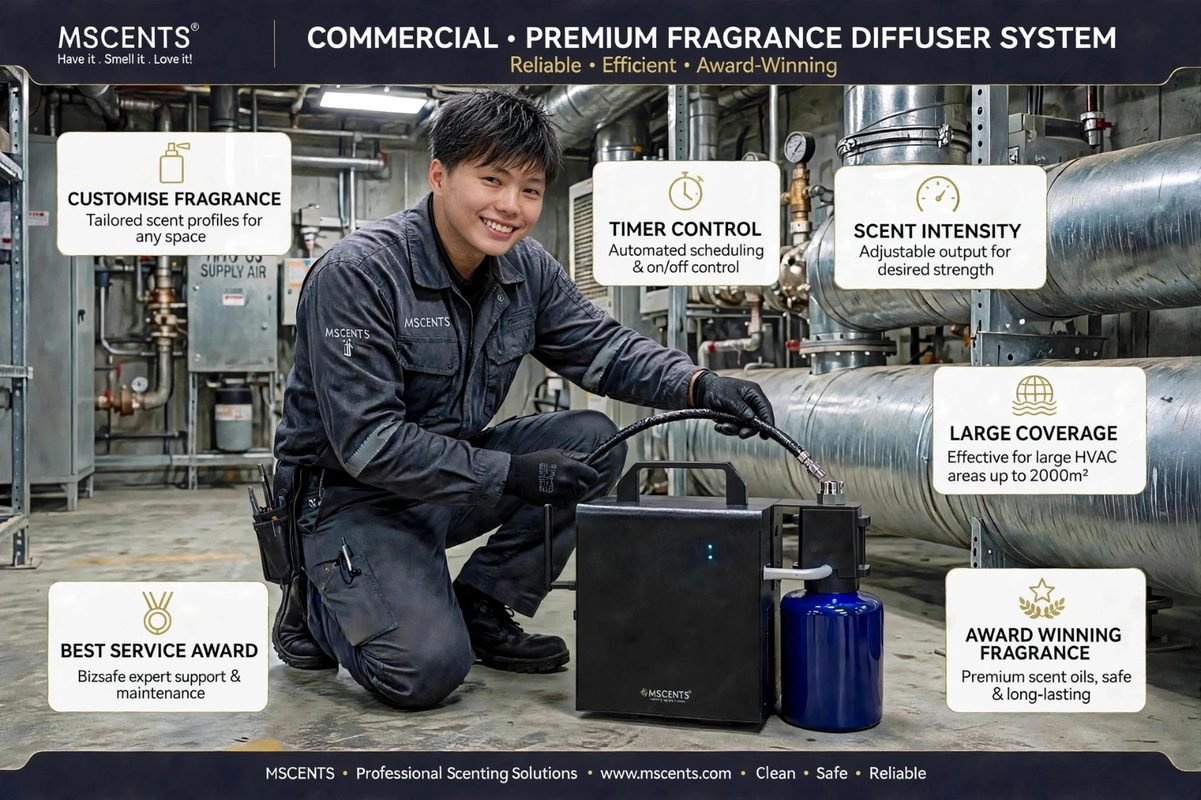
Ambient scenting works with a building’s ventilation, not in place of it. A scent diffuser releases fragrance into the surrounding air, so its placement should be considered alongside the building’s air-conditioning and ventilation layout. Property teams should consult their air-conditioning contractor to determine suitable placement. Scent does not clean the air or replace fresh air supply. Fix ventilation and cleaning first, then add scent.
Singapore’s National Environment Agency (NEA) provides guidance on improving ventilation and indoor air quality in buildings, while Singapore Standard SS554:2026 outlines the code of practice for indoor air quality in air-conditioned buildings. Property owners and facilities managers should keep ventilation systems in good working order and follow the relevant indoor air quality and ventilation guidance.
At MScents, our commercial scenting service includes a leased machine, installation, a warranty, filter replacement, and servicing, so less upkeep falls to your team.
Will tenants or staff object to the scent?
Some may. Fragrance sensitivity is an important consideration, as some employees may experience headaches, respiratory irritation or other adverse reactions when exposed to scented products. Organisations should therefore consider their workforce before introducing ambient scenting. The Canadian Centre for Occupational Health and Safety (CCOHS) also highlights potential health effects associated with exposure to scented products, particularly among people with fragrance sensitivities, asthma and allergies. Start with a light setting in visitor areas, tell tenants first and give them a way to raise concerns.
Plan scenting for your building
If you manage an office building and want to scent a lobby or reception area, contact our team. Send us the floor area, the ceiling height and the areas you want scented, and we will reply with the next steps.
Frequently Asked Questions
Who decides the scent in a multi-tenant building?
Control of common areas normally sits with the property team or managing agent, and tenants control their own units, though lease terms and house rules can differ. Tell tenants before installation, and check whether your building’s management rules cover fragrance.
Can scent deal with odours from a pantry or bin area?
It may help mask unwanted odours, but it does not remove their source. Clean the area, handle waste properly and check ventilation first. Scent can then be used to complement these measures.
How often should we review the scent?
Check with your front desk team a few weeks after installation, then review it whenever the lobby layout or tenants change. They hear visitor comments first.